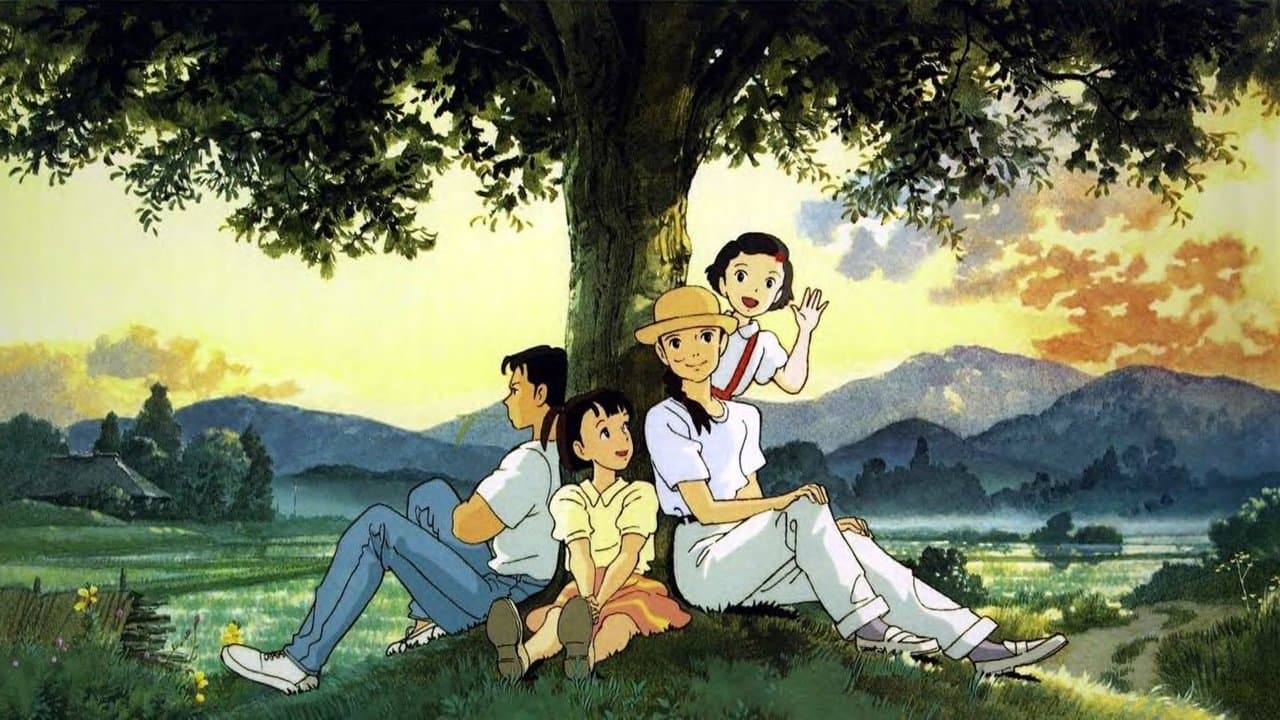
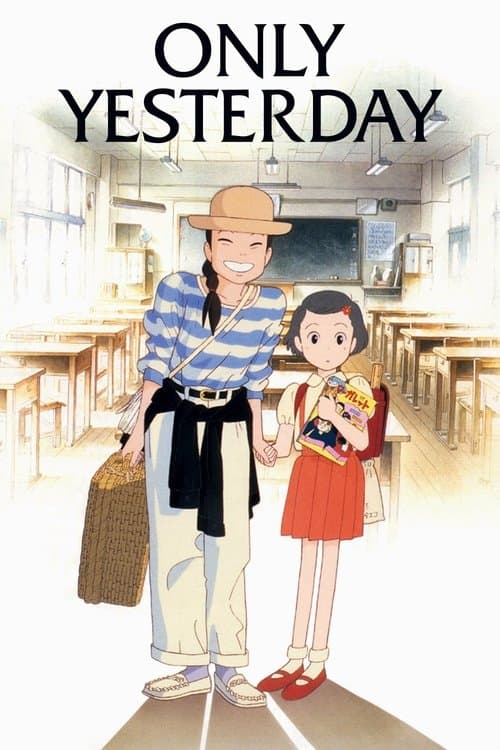
When most audiences hear the name Studio Ghibli, their minds immediately drift toward floating castles, whimsical forest spirits, and magical aviators envisioned by Hayao Miyazaki. Yet, the co-founder of the legendary studio, the late Isao Takahata, offered a profoundly different perspective—one anchored in emotional realism, domestic drama, and delicate social observation. Released originally in Japan before finding its global audience through remastered re-releases, Takahata’s 1991 classic Only Yesterday (Omohide Poro Poro) stands as a landmark in adult animation. Far removed from traditional fairy tales, the film offers a meditative character study of Taeko Okajima, a 27-year-old unmarried Tokyo office worker who escapes the noise of the metropolis for a rural vacation, only to find her childhood self accompanying her every step of the way.
A Delicate Dual Narrative: Nostalgia and the Weight of Expectations
Takahata constructs Only Yesterday around a double timeline: the present of 1982, where Taeko travels to Yamagata prefecture to participate in the traditional harvest of organic safflowers, and 1966, the pivotal year when she was a ten-year-old schoolgirl in post-war Tokyo. Rather than treating nostalgia as a cheap emotional trick, the film uses memory as a mirror. As Taeko rides the night train away from the capital, long-dormant recollections surface: the arrival of the family's first exotic pineapple, her first crushed crushes, her struggles with fractions, and the subtle domestic tensions within a middle-class Japanese household.
These memories are not presented as idealized golden days; instead, Takahata portrays the minor heartbreaks and quiet epiphanies of girlhood with unsparing accuracy. The ten-year-old Taeko struggles to understand why her father forbids her from appearing in a local play or why her sisters receive preferential treatment. By contrasting these formative moments with her 27-year-old self’s lingering insecurities, the film asks a fundamental question: Have we stayed true to the dreams and promises of our childhood selves, or have we merely conformed to society's timeline?
Urban Burnout vs. Rural Renewal: Resonance for Modern Viewers
For audiences across Central Asia and the CIS region—where major urban centers like Tashkent, Almaty, and Bishkek are undergoing rapid modernization—the thematic core of Only Yesterday feels strikingly contemporary. Today’s young professionals face an all-too-familiar duality: corporate career demands in sprawling cities versus deep-rooted traditional family values and rural heritage. Taeko’s quiet crisis is rooted in the social expectation that a woman in her late twenties must marry and settle down, a societal pressure deeply familiar to young women in traditional cultures today.
Her bond with Toshio, a former Tokyo corporate employee who abandoned city life to become an organic farmer, presents a compelling counter-narrative to modern consumerism. Toshio’s reverence for the land, sustainable agriculture, and community labor provides Taeko with an alternative framework for living. Takahata does not romanticize agricultural life as an easy escape; rather, he depicts the grueling physical labor of safflower harvesting while highlighting the dignity and peace that come from working in harmony with nature.
Artistic Innovation and Visual Realism
What sets Only Yesterday apart technically is Takahata’s groundbreaking approach to visual direction. To distinguish between the two eras, the production team utilized two distinct art styles. The 1966 memory sequences feature soft pastel palettes, minimalist watercolor backdrops, and faded edges that evoke the fleeting nature of human memory. In contrast, the 1982 present-day scenes are rendered with exquisite realism, rich natural colors, and precise environmental detail.
Furthermore, Takahata insisted on recording the dialogue prior to key animation—a rarity in Japanese anime—and instructed his animators to carefully study human facial movements, capturing the subtle dimples and cheek muscle contractions that occur when adults speak and smile authentically. This obsessive attention to detail imparts a lifelike, documentary quality to the drama.
- Director: Isao Takahata
- Studio: Studio Ghibli
- Original Voice Cast: Miki Imai (Taeko), Toshiro Yanagiba (Toshio), Yoko Honna (Young Taeko)
- English Voice Cast (2016): Daisy Ridley, Dev Patel, Alison Fernandez
- Key Themes: Childhood trauma, urban migration, organic agriculture, female identity, societal expectations
A Lasting Legacy in World Cinema
Decades after its original debut, Only Yesterday remains a testament to the versatility of the animated medium. It proves that animation can tackle complex internal conflicts, domestic melancholy, and socio-economic shifts without relying on magical realism or fantasy tropes. For viewers seeking a introspective cinematic experience, returning to Takahata's work offers both comfort and profound philosophical questioning. To fully appreciate this masterclass in character study, audiences are also encouraged to explore Takahata’s other realist works, such as Grave of the Fireflies and The Tale of the Princess Kaguya, both of which reinforce his place as one of global cinema’s greatest storytellers.