
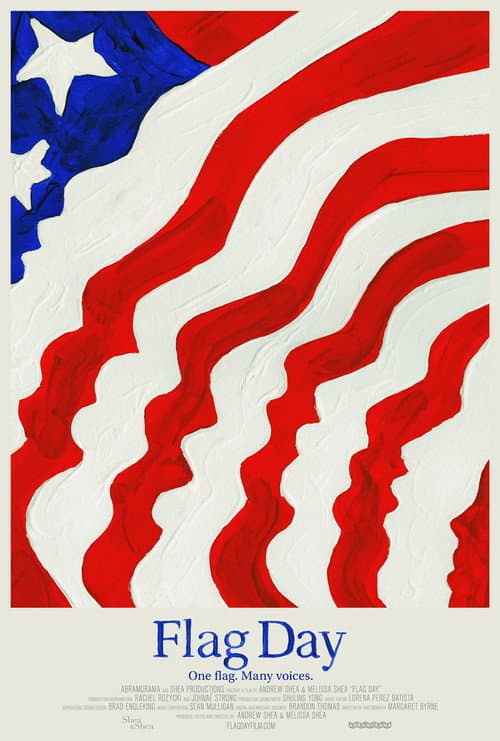
The cinematic calendar often prioritizes high-octane blockbusters and franchise expansions, but occasionally, a project arrives with the quiet gravity to capture the cultural zeitgeist in amber. Set for release on June 12, 2026, the observational documentary Flag Day positions itself as one of the most anticipated non-fiction works of the decade. Directed with a steady, unblinking verité eye, the film transports audiences to the unassuming farming community of Three Oaks, Michigan. Known nationwide for hosting the largest municipal Flag Day parade in the United States, this geographical pocket becomes a microcosm of a much larger, highly contested national experiment. As audiences in Central Asian and CIS territories watch contemporary global polarization reshape political landscapes, Flag Day offers a startlingly universal parable about how ordinary people navigate the friction between historical nostalgia and rapid socio-political transformation.
The Verité Tradition and the Architecture of Observation
To understand the artistic weight of Flag Day, one must examine the lineage of observational documentary filmmaking, often termed direct cinema or *cinéma vérité*. Pioneered by masters like Frederick Wiseman and Albert and David Maysles, this methodology deliberately strips away standard documentary crutches: there is no guiding voiceover narration, no prescriptive talking-head interviews, and no manufactured dramatic tension. Instead, the camera acts as a silent witness, allowing character, ritual, and conflict to emerge organically from the environment. In Three Oaks, Michigan, the annual June celebration is not merely a parade; it is an elaborate, heavily choreographed civic ritual designed to project unity.
Over the span of a single high-stakes weekend, the filmmakers embed themselves within the machinery of the event. We witness the meticulous labor of local volunteers stringing banners, the nervous precision of marching band directors tuning brass instruments, and the quiet dignity of veterans whose relationship to national symbols is deeply personal rather than abstract. By avoiding partisan editorializing, the documentary achieves something far more powerful: it maps the invisible fault lines running through everyday life. Local business owners grapple with economic shifts that threaten Main Street stability, while younger residents question the inherited narratives of their hometown. This granular focus transforms a localized American holiday into a universal meditation on civic belonging, appealing strongly to international film critics and festival curators who track the evolution of socio-political cinema.
- Release Date: June 12, 2026
- Setting: Three Oaks, Michigan (home of the nation's largest Flag Day parade)
- Cinematic Style: Observational / Direct Cinema (verité)
- Core Themes: Civic ritual, political polarization, national identity, community resilience
Global Resonance: Why Small-Town American Documentaries Matter to CIS Audiences
For cinephiles and cultural observers across Central Asia and the wider CIS region, Flag Day offers a fascinating cross-cultural mirror. While the specific iconography—red, white, and blue banners, marching brass bands, and American legion posts—is distinctly rooted in the Midwest, the underlying sociological phenomena are profoundly global. Every society grapples with the tension between collective memory and modern fragmentation. In nations undergoing rapid industrial, technological, and demographic shifts, communities frequently construct rituals to anchor themselves against the tide of change. The documentary exposes the fragility inherent in these efforts, showing how deeply well-intentioned civic pride can brush up against underlying ideological divides.
Furthermore, the film's observational approach challenges modern audiences accustomed to hyper-edited, algorithmically driven content. In an era where digital media constantly sensationalizes political polarization, Flag Day slows down time. It demands patience from the viewer, rewarding attentiveness with subtle character studies and profound emotional resonance. For international film markets, particularly arthouse distributors in Eastern Europe and Central Asia, verité projects of this caliber serve as masterclasses in visual sociology. They prove that cinematic truth is best found not in grand political speeches, but in the micro-interactions of ordinary people trying to hold their communities together for one more weekend.
As June 2026 approaches, industry analysts expect Flag Day to make significant waves on the international festival circuit before securing a targeted theatrical and streaming footprint. For viewers interested in the intersection of sociology, art, and contemporary politics, this release is positioned to be a landmark cinematic event. Watch for early critical responses following its festival premieres, as this observational portrait of Three Oaks is bound to spark vital global conversations about how societies remember, celebrate, and fracture.